2025 0820 062a
Trends In Equipment
Equipment was purchased secondhand from other railroads. The older locomotives were prone to breakdowns and constandy in need of repair.As new equipment was phased in, the drain on time and expenses decreased.
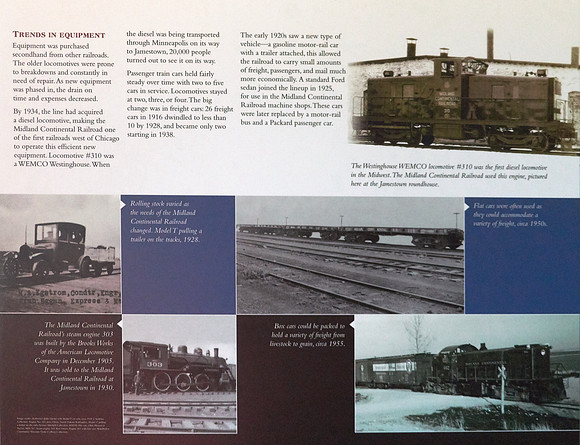
By 1934, the line had acquired a diesel locomotive, making the Midland Continental Railroad one of the first railroads west of Chicago to operate this efficient new equipment. Locomotive #310 was a WEMCO Westinghouse. When the diesel was being transported through Minneapolis on its way to Jamestown, 20,000 people turned out to see it on its way.
Passenger train cars held fairly steady over time with two to five cars in service. Locomotives stayed at two, three, or four. The big change was in freight cars: 26 freight cars in 1916 dwindled to less than 10 by 1928, and became only two starting in 1938.
The early 1920s saw a new type of vehicle-a gasoline motor-rail car with a trailer attached, this allowed the railroad to carry small amounts of freight, passengers, and mail much more economically. A standard Ford sedan joined the lineup in 1925, for use in the Midland Continental Railroad machine shops.These cars were later replaced by a motor-rail bus and a Packard passenger car.