2025 0322 030
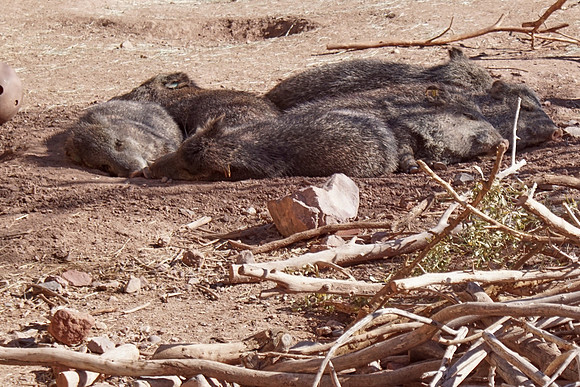
Collared Peccary
Dicotyles tajacu
Collared peccaries physically resemble their pig cousins with similar snouts, stocky bodies and thin legs. However, differences in skeletal, dental and stomach features put peccaries in a family of their own. Collared peccaries are also commonly known as javelinas, which comes from the Spanish word for javelin, meaning sword. This is due to their long, self-sharpening upper canine teeth that they use as formidable defense weapons and to tear tough plants like cactuses.
Collared peccaries have extremely poor eyesight and cannot see objects more than about three feet away. However, they have a keen sense of smell and can detect roots and bulbs up to three inches underground.
They also literally smell, earning them the nickname “musk hogs.” Above their tails and below each eye, they have scent glands that release a strong musk odor. The odor is released when peccaries are excited or alarmed and used to mark territory and identify family members. Related peccaries frequently participate in mutual rubbing sessions, called javelina handshakes, that create a group scent.
Collared peccaries are highly sociable, living in herds (called squadrons) averaging 3 – 15 individuals. Squadrons eat, sleep and travel as a cohesive group, usually foraging for food at dawn and dusk to avoid daytime heat. They typically ignore or stay away from humans, but if they feel threatened, they will give short barks or run away at speeds estimated at up to 30 miles per hour.
Diet: roots, fruit, cacti, invertebrates, small vertebrates
Zoo Diet: formulated pellets, veggies, greens, soaked beet pulp
Habitat: forests, chaparral, grasslands, deserts
Weight: 30 – 80 lbs