2025 0322 023
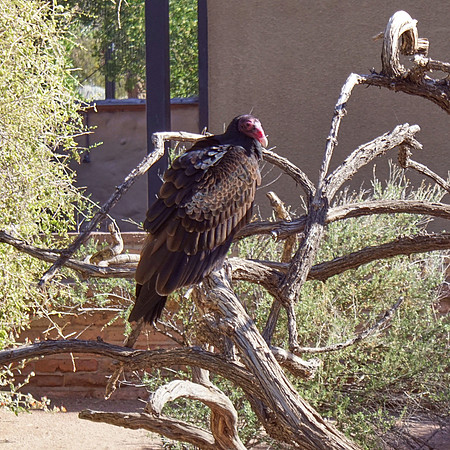
California Condor
Gymnogyps californianus
California condors are scavengers, seeking out carrion with their powerful sense of smell. Poking around in rotting, putrid carcasses can get pretty messy, but the lack of feathers on a condor’s head keeps decaying guts from sticking. In addition to helping them stay clean, a condor’s bald head may flush to a bright red color when irritated or excited.
California Condors hold the record as the largest flying bird in North America with a wingspan of up to 11 feet. Using their huge wings to glide on warm thermal air currents, they can travel great distances while expending very little energy.
The Phoenix Zoo’s two male condors were raised at the San Diego Zoo and later introduced to their natural habitat. Unfortunately, in the wild they grew sick from lead poisoning and had to be hospitalized. During their treatment, they were in close contact with people and so became comfortable in their presence. Upon their release, they began to seek out people and became a nuisance at campsites and parks. Because of this, they now serve as great conservation ambassadors to our Phoenix Zoo guests!
Diet: carrion
Zoo Diet: specialized carnivore diet, whole prey, bones
Habitat: mountains, grasslands, forests, coastlands
Weight: 17 – 25 lbs