2025 0322 021
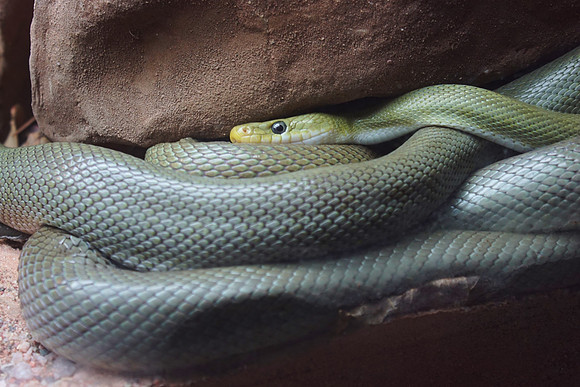
The narrow-headed gartersnake (Thamnophis rufipunctatus) is a non-venomous, semi-aquatic snake that is distinguished from other gartersnakes of its genus by the lack of stripes along its body and its elongated, triangular head. The narrow-headed gartersnake’s color ranges from olive to brown with dark spot or reddish along its body. Adults can reach a maximum length of four feet, with females larger than males.
Narrow-headed gartersnakes spend the majority of their time in or around water and primarily eat fusiform (torpedo-shaped) fish such as trout and dace, salamanders and tadpoles. The species brumates during colder months of the year. Brumation in snakes is similar to hibernation, but animals may move on warmer days during the brumation period, whereas hibernating animals typically sleep.
Narrow-headed gartersnakes are found in central Arizona east into western New Mexico, typically at elevations of 2,000-8,000 feet along rocky creeks and streams. The species is listed as Threatened under the US Endangered Species Act. Population numbers have declined significantly across the snake’s range. Habitat loss and degradation, non-native introduced species and climate change are all threats to narrow-headed gartersnakes.