2025 0324 200
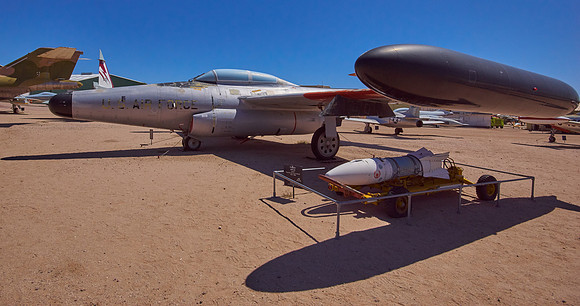
Northrop F-89J Scorpion
The F-89 was the U.S. Air Force’s first multi-seat, jet-powered all-weather fighter. The prototype first flew in August 1949 and deliveries of operational aircraft began in July 1950. The F-89D introduced several refinements to the aircraft, most notably the addition of launchers for 52 2.75-inch rockets in the wing tip fuel pods. Starting in 1956 a total of 350 F-89Ds were converted to F-89Js. The changes included electronic and radar upgrades to use the Genie air-to-air nuclear missile.
Wingspan59 ft 8 in.
Length53 ft 10 in.
Height17 ft 7 in.
Weight42,241 lbs (loaded)
Maximum Speed636 MPH
Service Ceiling49,200 ft
Range1,370 miles
EnginesTwo Allison J35-A-35 turbojets with 7,200 pounds of thrust
Crew2
ManufacturerNorthrop
Markings449th Fighter Interceptor Squadron, Ladd AFB, Alaska, 1957
DesignationF-89J
Serial Number53-2674
Service History:
Built by Northrop Aircraft, Palmdale, California as a F-89D and delivered to the U.S. Air Force on October 11, 1955.
October 1955: To 84th Fighter-Interceptor Squadron, Hamilton AFB, California.
January 1956: To 437th Fighter-Interceptor Squadron, Oxnard Airport, California.
April 1957: To Northrop Aircraft, Palmdale California for conversion to F-89J.
August 1957: To 449th Fighter-Interceptor Squadron, Ladd AFB, Alaska.
April 1958: To 5060th Consolidated Maintenance Group, Ladd AFB, Alaska.
May 1960: To Mobile Air Materiel Area, Alabama.
October 1960: To 142nd Consolidated Maintenance Squadron, Portland, Oregon.
April 1961: To 123rd Fighter-Interceptor Squadron, Oregon Air National Guard, Portland Municipal Airport, Oregon.
February 1963: To 142nd Fighter Group, Oregon Air National Guard, Portland Municipal Airport, Oregon.
February 1965: To Davis-Monthan AFB, Arizona for storage.
March 1965: Dropped from inventory as surplus.
1985: Loaned to Pima Air & Space Museum by the National Museum of the United States Air Force.
https://pimaair.org/museum-aircr