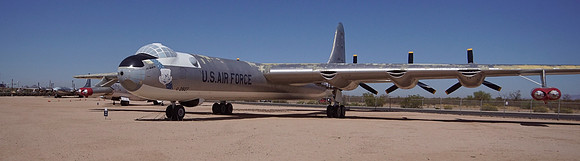
2025 0324 013
Convair B-36J Peacemaker
The B-36 is the largest bomber and the last piston engine powered bomber produced by the United States. First designed to meet a World War II requirement for a plane capable of hitting targets in Germany from bases in the United States the prototype did not fly until August 8, 1946. The development of the atomic bomb led the Air Force to conclude that it still needed a very long-range bomber capable of delivering the bombs over intercontinental ranges and production of the B-36 was continued despite the end of the war a year earlier. A total of 383 Peacemakers were built between 1947 and 1954. The era of piston engine powered bombers was coming to a quick end with the introduction of the all jet B-47 and B-52. The B-36 was the symbol of American air power in the first years of the Cold War, but even the addition of four jet engines could not bring the B-36 up to the performance standards of the newer aircraft and all of the B-36s were out of service by the first months of 1959.
Wingspan 230 ft
Length 162 ft 1 in.
Height 46 ft 9 in.
Weight 410,000 lbs (loaded)
Maximum Speed 435 MPH
Maximum Altitude 45,700 ft
Range 10,000 miles
Engines Six Pratt & Whitney R4360-53 with 3,800 horsepower each and four General Electric J47-GE-19 turbojets with 5,200 pounds of thrust each
Crew 13 Manufacturer Convair
Markings 95th Bomb Wing, Biggs AFB, El Paso, Texas
Serial Number 52-2827
Designation B-36J “City of Fort Worth”