2025 0324 012
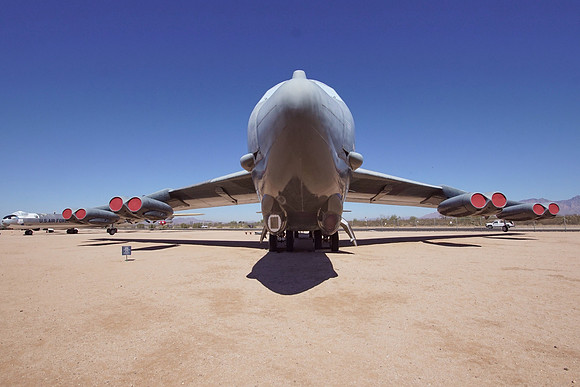
Boeing B-52D Stratofortress
Design work for what would become the B-52 Stratofortress began in 1945. After several major design changes, the first of the eight-engined bombers took to the air on October 2, 1952. The first of the eight major production variants of the B-52 were built in 1954, with production continuing through 1963. The fourth model of the B-52 built, the B-52D was the second most produced version of the Stratofortress. Delivery of the “D” models began in 1956 with a total of 170 built.
As they were first built, the “D” model was virtually identical to earlier models of the aircraft except that it lacked the reconnaissance ability of earlier B-52s and was intended purely as a bomber. In 1965, modification of B-52D aircraft began to increase their conventional bomb load. The “Big Belly” modifications resulted in the ability to carry a total 108 conventional bombs both internally and externally. This means that one aircraft could carry 54,000 pounds of bombs, roughly the equivalent of nine World War Two B-17s. B-52s dropped thousands of tons of bombs on targets in Vietnam, becoming the symbol of American strategic air power during that war.
Wingspan 185 ft
Length 156 ft
Height 48 ft
Weight 450,000 lbs (loaded)
Maximum Speed 650 MPH
Service Ceiling 50,000 ft
Range 6,000 miles
Engines Eight Pratt & Whitney J57-P-19W turbojets with 12,100 pounds of thrust each
Crew 6
Manufacturer Boeing
Markings 7th Bombardment Wing, Carswell AFB, Texas, 1981
Serial Number 55-0067
Designation B-52D “Lone Star Lady”