2025 0820 042
The Bedroom
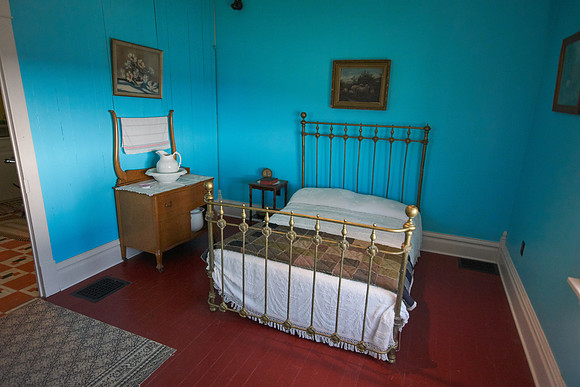
To modern eyes, the small bedroom seems to be missing something: where would the depot family put the clothes? And what is that huge wooden contraption against the wall?
Warmth
What's the temperature outside today? How comfortable are you in here? Today, we escape the cold and heat simply by entering the modern insulated, heated, or air-conditioned building. Back in the 1930s and 1940s, it was a lot harder to stay warm in the winter, and cool in the summer.
Here at the Midland Continental Railroad depot, the heating system was a coal stove on the lower floor. Warm air reach the living quarters through the floor register grills.
But the deepest chills of Winter, and poorly insulated building, the floor grill sometimes weren't enough. One depot agent often left the door at the bottom of the stairs open at night, so more heat with seep up to the bedrooms. Another family abandoned the upstairs on the coldest nights to sleep in the downstairs laundry room.
Water
these days, it's easy to take running water for granted. During the active life of this depot, getting water to the upstairs, kitchen was quite a bit more difficult than just turning on the faucet.
Water for the depot with store in the cistern/take under the women's, waiting room. Every month, a local farmer haul water to fill it, and other town sisters. To get water from the sister to the kitchen required arm, strength and elbow, grease, using hand, operated pump to fill drinking water, buckets, cook pots, wash, basins, and laundry tubs.
Call of nature?
Until a bathroom was stalled installed in the late 1940s of the woman's waiting room, the depot, agents family took their business outside, to the old house or are used a chamber pot in their bedrooms.
No closet?
In early days, most people that build closets in their homes, for several reasons. First, property taxes were calculated on the number of rooms in the house, or building, in closets, counted as rooms, so fewer closets meant lower taxes. S