2025 0820 039
The Kitchen
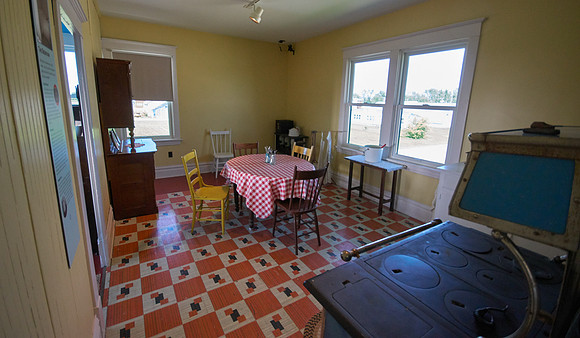
Hot and cold water on demand, refrigerator and freezer close at hand, and instant cooking heat in the microwave or range, that's the modern kitchen experience. But cooking just wasn't that simple back in the 1930s and 1940s. Dash the Range Dash the early equivalent of a modern electric or gas stove, the range was heated with water cold. Knows that it has burners of a sword made of solid iron, and an oven. Cooking on the range like this was an art. Recipes call for hot fire or medium fire. Baking meant maintaining a constant temperature for long periods of time.
The bump out on the right side is a reservoir, filled with water for washing hands, dishes, and clothes, and for cleaning.
The Cistern Pump
Before indoor plumbing, people relied on cisterns (underground storage chambers) or wells for water. Wimbelton was built in a marshy area - the water below the town was not very good, so most town for purchase water to fill their cistern, The cistern here at the Midland continental Railroad Depot was supplied by local farmer who hauled water in each month.
From the cistern (located under the women's waiting room) a pipe ran to a cistern pump in the kitchen. This hand-operated pump, drew water to fill buckets, basins, and tubs. Usually, drinking water, was kept in its own bucket, with a dipper, a bit like a modern water cooler. Dishes and hands could be washed in in an enamel or porcelain basin. Clothes, and sometimes children, or washed, and copper or galvanized boilers heated on the range.
Water
these days, it's easy to take running water for granted. During the active life of this depot, getting water to the upstairs, kitchen was quite a bit more difficult than just turning on the faucet.
Water for the depot with store in the cistern/take under the women's, waiting room. Every month, a local farmer haul water to fill it, and other town sisters. To get water from the sister to the kitchen required arm, strength and elbow, grease, using hand, operated pump t