2025 0820 014
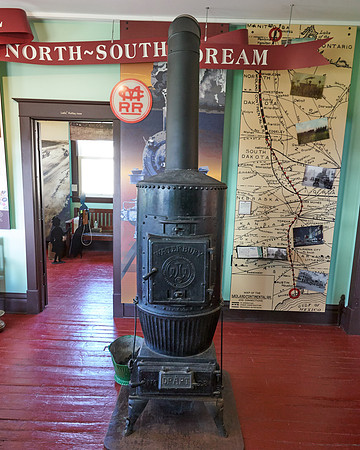
Coal Stove Heat
The smoke from the coal stove, located in the main waiting room, was drawn up into the stove pipe, through the wall, through this room, then through the chimney.
Keeping Warm In The Depot
as the Coal burned, heat radiated out into the room. The hot air rose through grates between the floors, as well as the open stairway stairwell, and supplied some heat to the upper story.
When Helen Russell, the last agent to work at the Wimbolton depot, lived here, they stored a rollaway bed behind a curtain in the ladies, waiting room and slept there in the winter as they found it just too cold to sleep upstairs. Jim Myers, husband of depot, agent, Norma Jean Meyer, recalls that it was cold, but they still slept upstairs and kept the door at the bottom of the stairs open so more warm air could come up from the stove then the small floor registers allowed.
Warmth
What's the temperature outside today? How comfortable are you in here? Today, we escape the cold and heat simply by entering the modern insulated, heated, or air-conditioned building. Back in the 1930s and 1940s, it was a lot harder to stay warm in the winter, and cool in the summer.
Here at the Midland Continental Railroad depot, the heating system was a coal stove on the lower floor. Warm air reach the living quarters through the floor register grills.
But the deepest chills of Winter, and poorly insulated building, the floor grill sometimes weren't enough. One depot agent often left the door at the bottom of the stairs open at night, so more heat with seep up to the bedrooms. Another family abandoned the upstairs on the coldest nights to sleep in the downstairs laundry room.