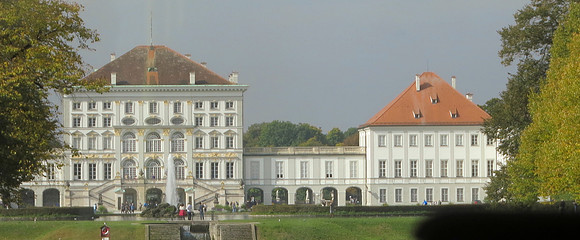
IMG_7049a
Nymphenburg Castle (Schloss Nymphenburg)
[center] The Nymphenburg Palace "Castle of the Nymph (or Nymphs)", is a Baroque palace in Munich, Bavaria, southern Germany. The palace was the main summer residence of the former rulers of Bavaria of the House of Wittelsbach. The palace was commissioned by the prince-electoral couple Ferdinand Maria and Henriette Adelaide of Savoy to the designs of the Italian architect Agostino Barelli in 1664 after the birth of their son Maximilian II Emanuel. The central pavilion was completed in 1675. As a building material, it utilised limestone from Kelheim. The castle was gradually expanded and transformed over the years. Starting in 1701, Maximilian Emanuel, the heir to Bavaria, a sovereign electorate of the Holy Roman Empire, undertook a systematic extension of the palace. Two pavilions were added each in the south and north of Barelli's palace by Enrico Zucalli and Giovanni Antonio Viscardi and were connected with the centre pavilion by two gallery wings. The palace, together with its park, is now one of the most famous sights of Munich. The baroque facades comprise an overall width of about 700 metres. Some rooms still show their original baroque decoration while others were later redesigned in rococo or neoclassical style. wiki
Natural History Museum
Driving through Munich. Photo from the tour bus.