DSC00888
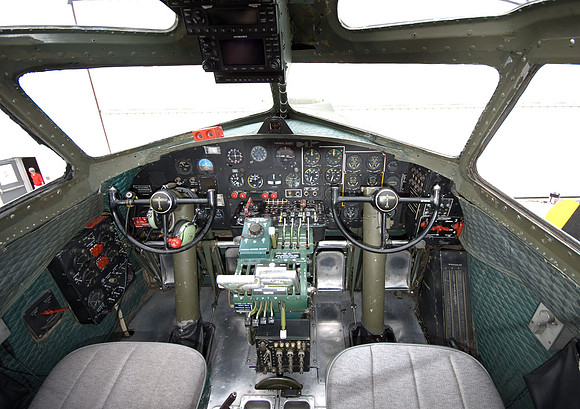
Cockpit of the Commemorative Air Force's (Mesa, AZ) B-17G 'Flying Fortress' a WW-II heavy bomber on display this week at the Fargo Air Museum.
Between the nose section and the bomb bay is the flight deck, or pilot's compartment. This elevated enclosure contains the pilot's and copilot's stations with all the essential flight controls, instruments, etc.
The copilot is the executive officerÑyour chief assistant, understudy, and strong right arm. He must be familiar enough with every one of your dutiesÑboth as pilot and as airplane commanderÑto be able to take over and act in your place at any time.
He must be able to fly the airplane under all conditions as well as you would fly it yourself.
He must be extremely proficient in engine operation, and know instinctively what to do to keep the airplane flying smoothly even though he is not handling the controls.
He must have a thorough knowledge of cruising control data, and know how to apply it at the proper time.
He is also the engineering officer aboard the airplane, and maintains a complete log of performance data.
He must be a qualified instrument pilot.
He must be able to fly good formation in any assigned position, day or night.
He must be qualified to navigate by day or at night by pilotage, dead reckoning, and by use of radio aids.
He must be proficient in the operation of all radio equipment located in the pilot's compartment.
In formation flying, he must be able to make engine adjustments almost automatically. -manual