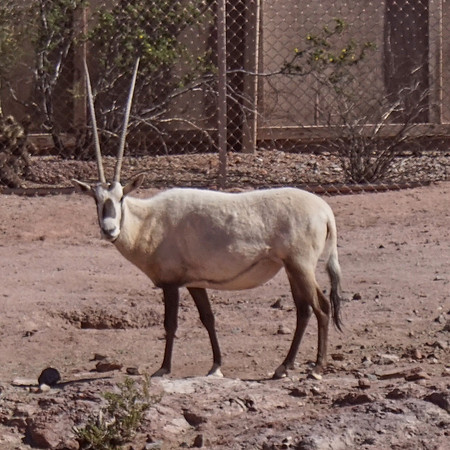
2025 0322 066
Nyala
Tragelaphus angasii
Nyalas are extremely sexually dimorphic, which is when sexes of the same species have different physical characteristics. Male and female nyalas appear so dissimilar that they look like they could be two different animals. Male nyalas are almost twice the height and weight of females, and only males have horns — 19 to 23 inches long, slightly spiraled, and with white or yellow tips. Males also have two long manes: one down the back and one from the chin to the stomach.
Female nyalas have short, caramel-colored coats, while males have shaggy, dark brown or gray coats. Also, females have distinctive vertical white stripes on their flanks, while males’ stripes are less well defined. Both sexes have a white chevron between the eyes.
Nyalas usually live within woodlands, forests or savannas that provide plenty of foliage, fruits and fresh water to consume. They have a special connection with the primates that share a similar diet and habitat. Nyalas will follow species like baboons and vervet monkeys, eating the fruit and other edible foods that the monkeys drop while foraging. The monkeys also act as a security team, making loud alarm calls when danger approaches. The nyala return the favor and make their own high-pitched alarm calls if they spot a threat on the ground.
Nyalas do not form strong social bonds or have clearly defined territories. Their ranges overlap, and fights among Nyalas are rare. Herds do not migrate but may alter their home range a little in bad conditions. They usually live in groups of four to eight, although herds can reach up to 30 individuals, and members frequently shift among groups. Females maintain a bond with their two youngest calves, but their older offspring move among herds. Males tend to be solitary or in impermanent groups that coexist harmoniously for most of the year, and they are often found near other types of antelopes.
Diet:
Diet: grasses, twigs, leaves, fruits
Zoo Diet: apples, sweet potatoe