2025 0322 034
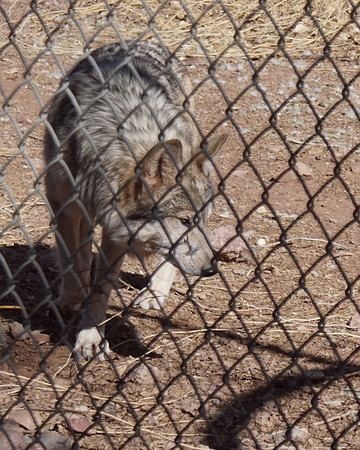
Mexican Wolf
Canis lupus baileyi
Mexican wolves are the smallest and most genetically distinct wolf subspecies. Like all wolves, the pack is the center of their social system. The average Mexican wolf pack size is between three and five individuals, though historically they could be larger. Packs typically consist of an adult alpha pair, yearlings, and pups born that year. Social bonds within packs are very strong, and the alpha pair will typically mate for life. Packs will establish territories that can span up to several hundred square miles.
Wolf packs enforce territory boundaries by howling. Howling strengthens bonds, helps pack members locate each other, and lets other wolves know to back off. And it works immediately. For longer-term communications, wolves will scent mark by depositing urine and scat, rolling on the ground, or scratching trees and dirt with their scent gland-possessing feet. Thanks to their keen sense of smell, wolves can collect large amounts of data with their noses, and scent-messages can linger for days or even weeks. Within the pack, wolves use body posture and touch to convey affection, fear, happiness, respect and other sentiments.
By the early 1900’s, over-hunting by humans of elk and other species had forced many wolves to prey on livestock. As ranching activities expanded, efforts were undertaken to eradicate wolves from the landscape. By the mid-70s, Mexican wolves had nearly been eliminated from the wild, and in 1976, the species was declared endangered. But hope was not lost. Between 1977 and 1980, trapper Roy McBride, working for the U.S. Fish and Wildlife Service, captured four male wolves and one pregnant female in Mexico. These five wolves, and two more that had been in managed care, were the start of a captive breeding and re-introduction program that continues today.
Diet: deer, elk, pronghorn, javelina, rabbits, rodents
Zoo Diet: formulated feed, specialized carnivore diet, whole prey, bones
Habitat: forests, grassland