2025 0324 050
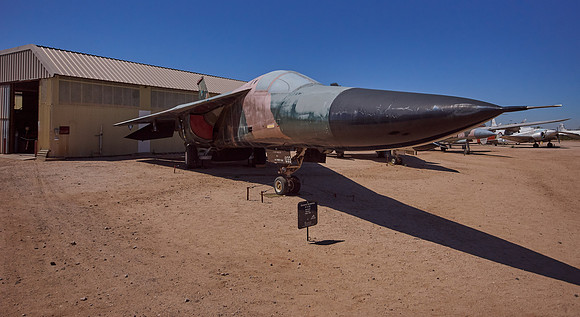
General Dynamics F-111E Aardvark
Design of the F-111 began in the late 1950s in answer to an Air Force requirement for a supersonic low-level tactical bomber. The F-111 is the first swing-wing aircraft to enter production for the U.S. Air Force. The moveable wings allow the aircraft to perform well at both slow and high speeds making it safer and more efficient. A controversial attempt by the Department of Defense to require the design to also serve as an interceptor for the Navy failed when the aircraft proved to be unsuitable for carrier operations but led to the development of the F-14 Tomcat. The first F-111A flew in December 1964 with the first production aircraft reaching service in 1967. The F-111E is a slightly modified and upgraded version of the original A model and was intended as an interim design while the substantially upgraded F-111D was developed. The Aardvark served in the U.S. Air Force until the mid-1990s when the last of them were retired. Aardvarks served with the Australian Air Force from 1973 to 2010.
Wingspan63ft (extended,) 31 ft 11 in. (swept)
Length73 ft 6 in.
Height17 ft 1 in.
Weight92,500 pounds (loaded)
Maximum SpeedMach 2.2
Service Ceiling69,000 ft
Range4,100 miles (with external tanks)
EnginesTwo Pratt & Whitney TF30-P-3 turbofans with 18,500 pounds of thrust each
Crew2
ManufacturerGeneral Dynamics
Markings20th Tactical Fighter Wing, 77th Tactical Fighter Squadron, RAF Upper Heyford, United Kingdom, 1992
Serial Number68-033
DesignationF-111E