2025 0324 035
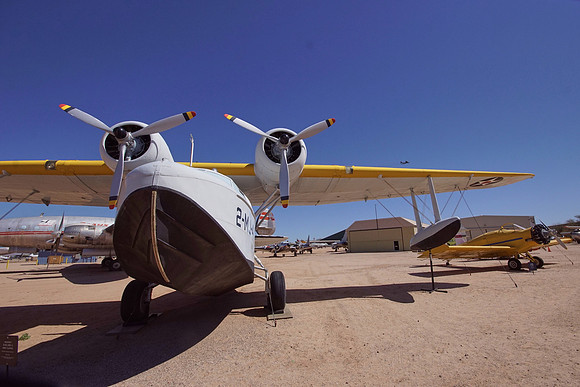
Sikorsky S-43 (JRS-1)
The Sikorsky S-43 and its military cousin, the JRS-1, were designed in the late 1930s as airliners and military personnel transports. Fifty-three were built between 1937 and 1941 for civilian customers and the U.S. Navy. A total of three S-43/JRS-1s survive today. Sometimes called the “Baby Clipper,” S-43s served with Pan American Airlines and other airlines on shorter routes for which the larger flying boats were not needed. Seventeen of these aircraft were purchased by the Navy with two of them going to the Marine Corps. Although the aircraft displayed at the Pima Air & Space Museum is actually a civil S-43, it has been painted in the U. S. Marine Corps markings of VMJ-2 out of deference to its owner: The National Museum of the Marine Corps in Quantico, VA. The aircraft it represents was destroyed by fire in January 1942.
Wingspan86 ft
Length51 ft 2 in.
Height17 ft 8 in.
Weight17,541 lbs (loaded)
Maximum Speed200 MPH
Service Ceiling20,000 ft
Range775 miles
EnginesTwo Pratt & Whitney R-1690 with 800 horsepower each
Crew2 pilots, 1 flight attendant, with 15 commercial passengers or 24 military troops
ManufacturerSikorsky
MarkingsVMJ-2, San Diego, California, ca. 1939
DesignationS-43 “Baby Clipper”
RegistrationNC16934
Serial Number4325 (1061)
Snow S-2A
The Snow S-2 was one of the leading agricultural “crop duster” aircraft of the late 1950s and 1960s. The S-2 was designed in 1958 and was built in three different models. The main difference was the location of the chemical tank and the type of engine used. The S-2A was the second version built and was introduced in 1959. The Snow Aeronautical Corporation was eventually bought by Rockwell International. The company’s founder, Leland Snow, left Rockwell in 1972 to found Air Tractor, which is still producing agricultural aircraft similar to the S-2.
Wingspan: 44 ft 7 in.: : Length: 28 ft 8 in.: : Height: 8 ft 10 in.: : Weight: 5,600 lbs (loaded): : Maximum Speed: 138 mph