2025 0324 123
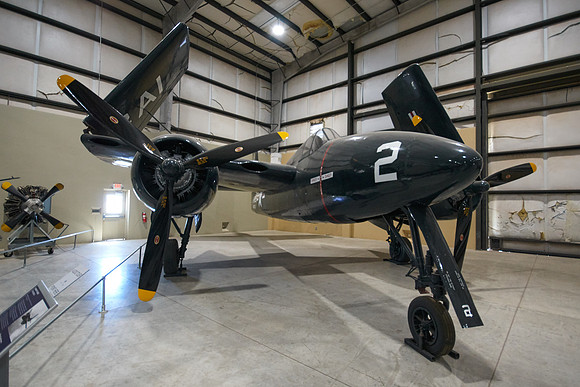
Grumman F7F-3 Tigercat
The Grumman Tigercat was the first twin-engine fighter to go into production for the U.S. Navy. Although it was intended to operate from aircraft carriers it rarely did so as the aircraft’s weight and speed made it overly dangerous. Operated from land bases the Tigercat proved to be a very good performer. It was fast, heavily armed, very maneuverable for a two-engine fighter, and easy to fly. Although the F7F first flew in 1943 it was not until August 13, 1945 that the first Tigercat fighter squadron reached Okinawa. Several Tigercat variants were produced including the single seat day fighter, a two-seat night fighter, and a single seat photo reconnaissance version. Having missed World War II by a matter of hours the F7F had to wait for the Korean War to prove its abilities. Tigercats operated successfully as night fighters, and in night ground interdiction missions. The F7F was phased out of Marine service by 1954 but several Tigercats were sold to civilians for aerial firefighting. Of the 364 Tigercats built fewer than 10 remain.
Wingspan51 ft 6 in.
Length45 ft 4 in.
Height16 ft 7 in.
Weight25,720 lbs (loaded)
Maximum Speed435 MPH
Service Ceiling40,700 ft
Range1,200 miles
EnginesTwo Wright R-2800-34W radials with 2,100 horsepower each
Crew1
ManufacturerGrumman
MarkingsMarine Night Fighter Squadron 533 (VMF(N)-533), Marine Corps Air Station Cherry Point, North Carolina, 1952
DesignationF7F-3
Serial Number80410