2025 0324 098
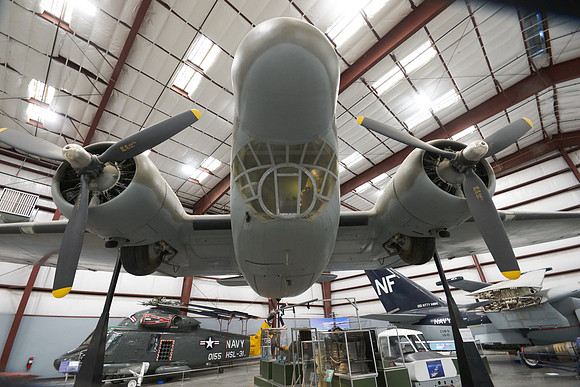
Douglas B-18B BOLO
Designed in response to a 1934 U.S. Army Air Corps requirement for a replacement for the B-10, the B-18 was based on the Douglas DC-2 airliner using similar wings, tail and engines. The Bolo entered production in 1936 and by 1940 most of the bomber squadrons in the Air Corps were equipped with B-18s. When the United States entered World War II the B-18 was obsolete as a bomber and was in the process of being replaced by the B-17, however 122 were modified with a nose mounted radar replacing the bombardier and magnetic anomaly detectors for locating submarines installed in the tail and called B-18B. These aircraft served in the Caribbean and Atlantic hunting for German submarines through 1943. Most B-18s were retired to transport duties for the remainder of the war and were then sold as surplus in 1945 and 1946.
Wingspan89 ft 6 in.
Length57 ft 10 in.
Height15 ft 2 in.
Weight27,673 lbs (loaded)
Maximum Speed215 MPH
Service Ceiling23,900 ft
Range3,660 miles
EnginesTwo Wright R-1820-53 radials with 850 horsepower each
Crew6
ManufacturerDouglas
Markings25th Antisubmarine Wing, 4th Antisubmarine Squadron, Langley AAF, Virginia, July 1942
DesignationB-18B
RegistrationN66267
Serial Number38-593
behind:
Kaman SH-2F Seasprite
The Seasprite is a light anti-submarine helicopter designed to be operated from smaller warships such as destroyers and frigates. The original design of the SH-2 dates to 1957 and a Navy requirement for a light utility helicopter. Kaman won the contract and began producing the HU2K in 1962. In the late 1960s the Navy began to look for an anti-submarine helicopter that would be small enough to operate from destroyers and frigates. The Seasprite proved to be perfect for the job and the SH-2D version was introduced. The most significant upgrades to the design were the addition of a second engine and external weapon mounting points. The SH-2D entered service in 1971. By the mid-1980s virtually all the Seasprite